Meme coin: how traders chase 100x on Solana and what actually decides the outcome
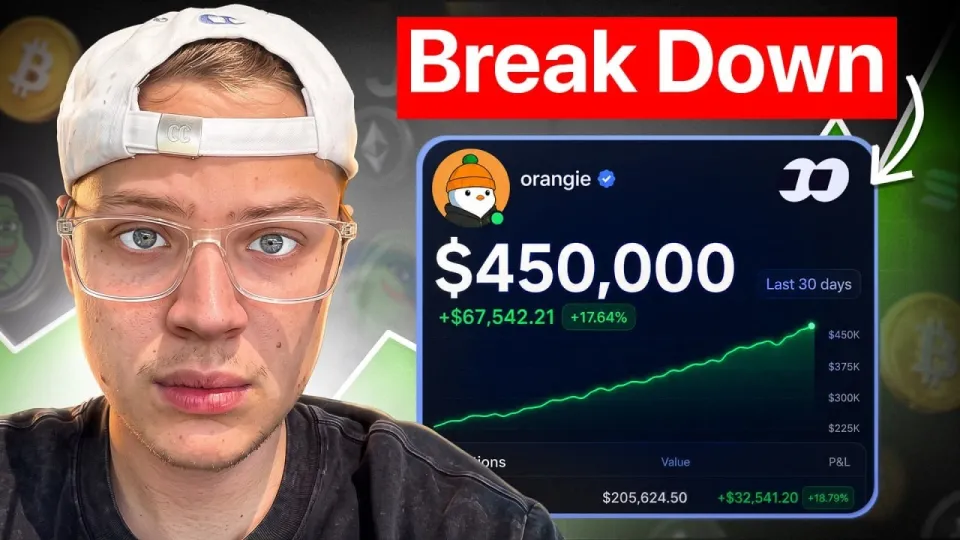
Video: How I Made $450,000 Trading Memecoins in 30 Days
Need articles like this for your video? They help promote it on YouTube and Google — order them in the Telegram bot @sat_sit_bot. It writes articles around your video, embeds the video and publishes them on popular niche websites (no ads). Try it free: 50 articles on us.
· based on the channel Orangie Web3
Key takeaways
- A meme coin has no cash flow or product — price is driven purely by attention, liquidity and the speed of new buyers.
- The $450,000 result in 30 days shown by Orangie Web3 came from many small entries plus a few outsized winners, not one lucky ticket.
- Most launches on Solana die within hours; survival rate and holder distribution matter more than the meme itself.
- Position sizing, not coin picking, is what keeps a trader alive long enough to catch a 10x or 100x.
- Community access (Discord groups, paid chats) compresses research time but also creates exit-liquidity risk for late buyers.
A meme coin is a cryptocurrency with no product, cash flow or roadmap — its price is set almost entirely by attention, liquidity and how fast new buyers arrive. Trading them profitably is less about spotting the funniest ticker and more about position sizing, exit discipline and understanding who is on the other side of your order. The Orangie Web3 breakdown of a $450,000 run in 30 days is a useful case study in exactly that mechanics, and the paid Kaizen group behind it is accessible via the Kaizen checkout page.
What a meme coin actually is and why it moves
A meme coin is a token whose value proposition is the meme itself: a dog, a frog, a character, a joke that spreads faster than any whitepaper. Dogecoin is the original example, but the modern version lives on Solana, where launching a token costs a few dollars and takes under a minute. Because there is no earnings model to anchor a price, valuation is reflexive — buyers arrive because the price is going up, and the price goes up because buyers arrive.
That produces three structural features every trader should internalise:
- Liquidity is thin and removable. A large share of supply often sits in a handful of wallets, and the pool can be drained by the deployer. Checking whether liquidity is locked and how concentrated holders are is the first filter, not the last.
- Attention decays fast. Meme cycles that used to last weeks now compress into hours. A coin that trends at breakfast can be dead by dinner.
- The narrative is the product. Tickers tied to a live cultural moment (a viral character, a political event, a celebrity animal) attract flow that a generic fork never will.
Inside the $450,000 in 30 days result
The headline number in the Orangie Web3 video is a portfolio outcome across dozens of trades, not a single moonshot, and that distinction is the whole lesson. Traders who post six-figure results in a month typically show a distribution: many small losses, a few 2x–5x winners, and one or two positions that ran 20x or more and paid for everything else.
What that implies practically:
- Hit rate is low by design. Losing 60–70% of entries is normal and survivable if each loss is capped at a small fraction of the account.
- The winners must be allowed to run. Taking 30% profit on every position guarantees the one 50x never materialises in the P&L.
- Speed of execution matters more than analysis depth. On Solana, the difference between entering at a $200k market cap and a $2m market cap is the difference between a 10x and a 1.5x.
- Record-keeping is the edge. Reviewing entry, exit and the reason for each trade is how a trader learns which setups actually repeat.
How a trade is actually built, step by step
Building a meme coin trade is a repeatable process, and skipping steps is what turns a speculative bet into a donation. A workable sequence:
- Screen for freshness and flow. Look at tokens launched in the last few hours with rising unique buyers and consistent volume — not just a big green candle.
- Audit the contract and holders. Check mint authority, freeze authority, top-10 wallet concentration and whether the liquidity pool is burned or locked.
- Read the narrative. Is the meme tied to something currently being discussed outside crypto? A ticker that needs explaining rarely travels.
- Define the exit before the entry. Decide the invalidation level and the first profit-taking level in advance, and size the position so a total loss is under a fixed percentage of the account.
- Execute and log. Enter, record the thesis in one sentence, and review it later against what actually happened.
The traders who consistently do this on Solana use aggregators and social terminals rather than manual chart reading; platforms such as the one promoted as FOMO in the video exist precisely to shorten steps one through three.
Where the real risk sits
Risk in meme coin trading is concentrated in a few failure modes that account for most losses. The most expensive is exit liquidity: buying a coin that a large group already holds because a call channel announced it. By the time a call reaches a public Discord, the early wallets are often selling into that demand. The second is liquidity illusion — a chart showing a $5m market cap on a pool holding $40k, where any meaningful sell moves the price 40%.
The third is size. A trader who risks 20% of the account per trade will be wiped out by a normal losing streak of five, which happens regularly at a 30–40% hit rate. Risking 1–3% per position keeps a 20-trade drawdown survivable and leaves capital for the trade that actually works. The fourth is narrative lag: buying a meme that peaked two days earlier because the chart looks cheap.
A fifth, less discussed risk is operational: wallet drainers, fake mint links and malicious token approvals. Separate hot wallets for trading and storage, and never sign a transaction from a link you did not source yourself.
What the audience actually asks about
Questions from viewers of the Orangie Web3 channel cluster around a few recurring doubts, and they are worth answering directly because they decide whether a beginner survives the first month.
"I lost 90% of my first $100 — is that normal?" Yes, and it is the most common first-month outcome. Small accounts are usually destroyed by oversized positions and by entering after the move. The fix is not a better coin, it is smaller size and a written exit plan.
"Isn't this just insider coordination?" Some of it is. Groups where experienced traders share early calls do compress the information advantage, and joining one does not put you in the same seat as the people who found the token at a $30k market cap. Assume you are always later than someone.
"Do I need to understand every technical detail first?" No, but you need three: how to check holder concentration, how to verify liquidity is locked, and how to set a stop. Everything else can be learned while trading small.
"How much time does this take?" Active meme trading on Solana is a screen job during the hours when flow is highest. It is not passive income, and treating it as such is how accounts get abandoned mid-drawdown.
Useful links
- Kaizen group access: https://whop.com/checkout/plan_GTFkEFh0JFpU8?a=orangie
- FOMO trading platform: https://fomo.family/r/orangie
- Orangie Discord community: https://discord.gg/memecoins
- Instagram: https://www.instagram.com/orangieyt/
The takeaway
Meme coin trading is a game of asymmetric bets executed quickly and sized carefully, and the $450,000 in 30 days figure is best read as the visible top of a distribution full of small losses. The repeatable skills are contract and holder checks, a defined exit before entry, and position sizing that survives a losing streak. Anyone treating a single viral ticker as a plan will fund the people who treat it as a process. The Orangie Web3 channel is the source of this breakdown, and the Kaizen group checkout is where the trading workflow behind it is documented.
Questions & answers
How much money do you need to start trading meme coins?
You can start with a small amount, but the size should be chosen so that a total loss on one position does not change your life. Most experienced traders risk 1–3% of the account per trade, which means a $200 account risks $2–6 per position — enough to learn the mechanics without being wiped out by a normal losing streak.
Why do most meme coins go to zero?
Because there is no underlying business to create demand once attention fades, and because supply is often concentrated in a few wallets that sell into new buyers. Thin liquidity makes the decline fast: a modest sell order can move the price 30–40% when the pool holds only tens of thousands of dollars.
Is it worth paying for a trading group or Discord?
A paid group shortens research time and gives access to earlier information, but it does not put you ahead of the people who found the token first. Treat group calls as a starting point for your own checks on holders, liquidity and narrative, and assume you are always entering later than the original buyers.
How do you take profit without killing a 100x?
Scale out in stages instead of exiting at one price. A common structure is selling a portion to recover the initial capital once the position doubles, then letting the remainder run with a trailing stop. That way a single large winner can pay for many small losses without the whole position being closed too early.
Source: How I Made $450,000 Trading Memecoins in 30 Days · Markdown version